PGIM appoints head of Japan real estate
Ryuji Katayama will oversee PGIM’s real estate business in Japan.


Ryuji Katayama will oversee PGIM’s real estate business in Japan.
Ryuji Katayama will oversee PGIM’s real estate business in Japan.

UBP’s former head of private markets, Asia, has also joined the bank as head of alternatives specialists, emerging markets.
Ryuji Katayama will oversee PGIM’s real estate business in Japan.
Ryuji Katayama will oversee PGIM’s real estate business in Japan.
UBP’s former head of private markets, Asia, has also joined the bank as head of alternatives specialists, emerging markets.

Sponsored by Loomis Sayles & Natixis
The Growth Equity Strategies Team at Loomis Sayles, an affiliate of Natixis Investment Managers, demonstrates that patience, discipline and conviction result in consistent, peer-leading risk-adjusted compounding over cycles.
Ryuji Katayama will oversee PGIM’s real estate business in Japan.
UBP’s former head of private markets, Asia, has also joined the bank as head of alternatives specialists, emerging markets.
UBP’s former head of private markets, Asia, has also joined the bank as head of alternatives specialists, emerging markets.
UBP’s former head of private markets, Asia, has also joined the bank as head of alternatives specialists, emerging markets.

Bitcoin’s changing relationship with equities and gold is prompting new questions about its role in diversified portfolios, according to Giselle Lai.

This week, FSA compares the T. Rowe Price Global Government Bond fund and the Amundi Global Government Bond fund.
This week, FSA compares the T. Rowe Price Global Government Bond fund and the Amundi Global Government Bond fund.

This week FSA compares two European equities funds: BlackRock GF European Value fund and the JPMorgan Europe Dynamic fund.
The launch comes two weeks after launching an optical communication ETF.
The launch comes two weeks after launching an optical communication ETF.

The shift towards higher interest rates is creating opportunities for selective exposure to financial stocks, says Min Zeng.
Asia is at the meeting point of capital, compute, talent, and algorithms, and where every token the world consumes ultimately has to be made, says Morgan Stanley Investment Management’s Jitania Kandhari.


By Jitania Kandhari, deputy CIO, solutions & multi-asset group, lead portfolio manager passport global strategies at Morgan Stanley Investment Management.
Three years ago, artificial intelligence (AI) was a topic of curiosity. Today it is the subject of capital allocation. For those allocating capital in and across Asia, the opportunity encompasses the physical backbone of the AI revolution being built globally.
AI’s rise began with Google’s 2017 Transformer breakthrough1, initiating a self-reinforcing cycle across four simultaneously scaling forces: advancing algorithms, rapidly expanding compute, talent concentration in a few institutions, and unprecedented capital deployment. Since then, approximately $2.3trn has been invested. In 2025, token consumption increased more than tenfold. The top four hyperscalers increased capital expenditure by 95% year-on-year in Q1 2026, with global cloud capex nearing $685bn for the year2. AI capabilities are doubling every four months3, suggesting systems 250 times more powerful by 2028.
The four-way convergence of AI technologies has driven various phases of the AI revolution. Initially, AI was reactive, responding to user queries. It then evolved into generative AI. We are now progressing toward Artificial General Intelligence (AGI), where AI can perform any intellectual task a human can, without needing task-specific retraining. While current AI is powerful yet limited, AGI aims to eliminate these constraints.
The current AI buildout is following a historical pattern that has been repeated across every major infrastructure cycle for 170 years, from subsea telegraphy in the mid-19th century to the internet era in 2000, with one critical difference: velocity.
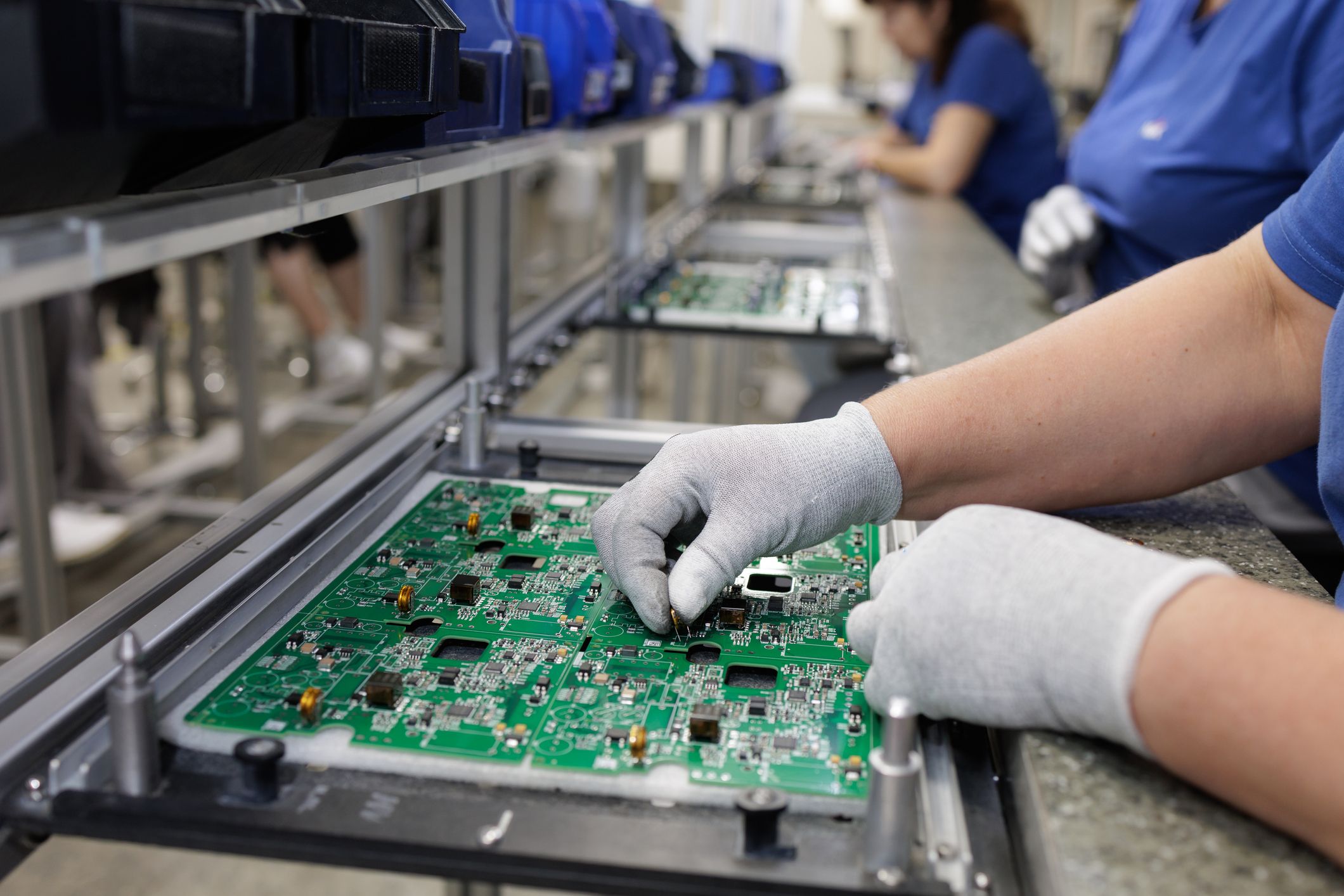
For Asian investors, the infrastructure rollout is crucial. Hyperscaler capex is the revenue line of the AI hardware stack, where supply constraints create opportunities in chips, memory, servers, cooling, transformers, silicon photonics, and networking. Taiwan leads in advanced semiconductor fabrication and AI server integration, while South Korea provides essential high-bandwidth memory, with global requirements projected to reach 32 billion gigabytes by 2026. Meanwhile, China has achieved model performance comparable to US peers with about 18% of the capital expenditure4. Since 2022, chip revenues have surged as each chip has become more complex and valuable. We believe that Asia’s technology industrial base is essential for the AI revolution.
AI generates tokens. Every query answered, every document drafted, and every agent action executed generates tokens. They are measurable, priceable, and scalable. The most important conceptual shift in understanding AI as an investment is the reframing of the data centre: these are no longer cost centers but AI factories, and their output is tokens.
A cost center is managed down, whereas a factory is a productive asset to be expanded. When today’s leading GPU manufacturer describes customer infrastructure decisions, the question is no longer how much to spend on technology, but how much token-producing capacity to build. Capex authorization has moved from an IT function to a board-level decision.
Physical factories, however, depreciate over decades. GPUs are functionally obsolete in three to five years,5 as each new chip generation delivers a step-change in performance per dollar and per watt. That depreciation curve is central to how durable today’s capital deployment turns out to be, with capex, in places, financed on multi-decade assumptions.
Tokens are priced in dollars per million, similar to how electricity is priced per kilowatt-hour. Companies with three times more compute are generating three times more revenue. The critical efficiency metric is tokens per watt — intelligence produced per unit of energy consumed.
The demand trajectory for tokens is not linear. AI has evolved through three phases, each a step-change in token consumption. Generative AI established the baseline. Reasoning AI requires approximately 1,000 times more compute. Each phase has expanded the market rather than replaced it, and the drivers of demand are multiplying together.
The downstream implication for software is significant. Companies will shift from selling tools to selling agents that use those tools, in effect becoming resellers of intelligence, with revenue tied to token consumption rather than subscription headcount. That reshapes pricing, margins, and the logic of software competition across the region. The next chapter will be built on consuming tokens, and Asia manufactures the infrastructure on which every token depends.
That shift cuts both ways for the region. The same agentic systems that will run on Asia’s infrastructure are also a substitution story for the labour-intensive services economies built across India and the Philippines. Business process outsourcing and IT services — sectors employing tens of millions across the region — are precisely the workflows agentic AI is being built to automate. The infrastructure boom and the services disruption are two sides of the same trend, and Asian economies sit on both sides of it.
The opportunity is real. So are the risks. The first risk is that the convergence stalls. There is credible research suggesting scaling laws are flattening and that more compute no longer produces proportionally better models. If AGI takes materially longer than expected, today’s extraordinary capital deployment could create stranded assets on an extraordinary scale.
That risk is compounded by how the capital is actually structured. A meaningful share of current capex involves circular financing arrangements — chipmakers investing in or extending credit to the cloud providers and model labs that buy their chips — alongside a fast-growing wedge of private credit underwriting data centres off balance sheet. Capital that is equity-funded from existing cash flow unwinds very differently than capital that is circular or debt-financed. The composition of the $2.3trn matters as much as its size.
The second is the gap between capability and monetization. Every metric of AI performance is accelerating. Economy-wide productivity gains, however, are not yet visible in the data. Most enterprises remain in an experimental phase, and unless that gap closes, AI will remain a cost centre rather than a revenue generator for the broader economy. The capital cycle could turn hard.
The third is reliability. In conversational AI, a hallucination produces a wrong sentence. In agentic systems executing tasks across enterprise workflows, a model error produces a wrong action, with real consequences. One high-profile failure at a systemically important institution could trigger regulatory intervention that slows adoption for years. The liability framework for agentic AI is entirely unresolved.
Last but not least, the ecosystem may seem diverse, encompassing semiconductors, cloud, models, and applications, but it is deeply interconnected and centred in Taiwan. Taiwan is crucial for producing advanced chips, packaging, and server integration across nearly every layer. A significant capex reduction or regulatory action could affect all layers simultaneously.
For Asian asset owners, the opportunity is not in any single layer. It is in understanding how all the layers connect, who controls the scarce inputs at each stage, and where the bottlenecks migrate next. Asia sits at the foundation of that stack — the meeting point of capital, compute, talent, and algorithms, and the place where every token the world consumes ultimately has to be made.
Sources

Combining dividend-paying equities, sovereign bonds and structured products can help generate resilient income while reducing portfolio concentration risks, believes Templeton Global Investments.

The AI investment story is broadening, creating opportunities beyond the biggest names in tech.

Investments are being underwritten for higher for longer, and tested for potential input-cost pressure, according to Hamza Azeem, managing director in the portfolio management group at Hamilton Lane.