Geopolitical diversification top of mind for wealthy investors: Julius Baer survey
Building portfolios resilient to shocks is a top priority for wealthy investors surveyed in Julius Baer’s latest Family Barometer Report.

Building portfolios resilient to shocks is a top priority for wealthy investors surveyed in Julius Baer’s latest Family Barometer Report.
Building portfolios resilient to shocks is a top priority for wealthy investors surveyed in Julius Baer’s latest Family Barometer Report.

The global private markets firm said it raised significant commitments from investors in Asia and the Middle East.
The global private markets firm said it raised significant commitments from investors in Asia and the Middle East.
The global private markets firm said it raised significant commitments from investors in Asia and the Middle East.
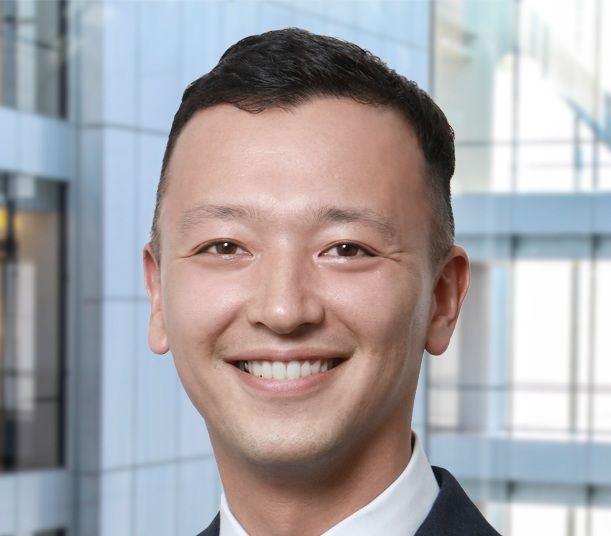
Ryuji Katayama will oversee PGIM’s real estate business in Japan.
Sponsored by Loomis Sayles & Natixis
The Growth Equity Strategies Team at Loomis Sayles, an affiliate of Natixis Investment Managers, demonstrates that patience, discipline and conviction result in consistent, peer-leading risk-adjusted compounding over cycles.
The global private markets firm said it raised significant commitments from investors in Asia and the Middle East.

Schroders is calling for investors to look beyond dominant market themes to identify businesses whose long-term prospects may not be adequately reflected in their share prices.
Schroders is calling for investors to look beyond dominant market themes to identify businesses whose long-term prospects may not be adequately reflected in their share prices.
Schroders is calling for investors to look beyond dominant market themes to identify businesses whose long-term prospects may not be adequately reflected in their share prices.

Investors may need to look beyond traditional portfolio strategies as artificial intelligence (AI) reshapes market correlations and higher rates increase the importance of cash flow, says Nelson Yu.

This week, FSA compares the Invesco US Value Equity Fund and the Harris Oakmark U.S. Value Equity Fund.
This week, FSA compares the Invesco US Value Equity Fund and the Harris Oakmark U.S. Value Equity Fund.

This week, FSA compares the T. Rowe Price Global Government Bond fund and the Amundi Global Government Bond fund.

The launch comes two weeks after launching an optical communication ETF.
The launch comes two weeks after launching an optical communication ETF.

The shift towards higher interest rates is creating opportunities for selective exposure to financial stocks, says Min Zeng.
‘I don’t have enough liquid alternatives on my platform’ – is a common confession from heads of manager research at different wealth platforms in Asia, according to GMO CEO Scott Hayward.


There has been a jump in demand for liquid alternatives, particularly in Asia, as investors look to diversify their illiquid exposures.
This is according to GMO CEO Scott Hayward, who told FSA in an interview that he has seen considerable interest from Asian investors looking for liquid alternatives.
After years of allocating significant portions of portfolios into private equity and credit, both institutional and wealth investors are looking for liquidity options, he said.
“The words I hear from both wealth platforms and institutional managers most frequently are needing to be more nimble and opportunistic,” Hayward (pictured) said.

“And they see the ability to be more nimble and opportunistic by having liquidity and the potential for exposure to orthogonal or diversifying strategies that aren’t highly correlated with the other exposures of their portfolio.”
Unlike private equity and credit, liquid alternative strategies such as systematic funds, global macro funds, equity long/short and fixed income long short funds, can – as the name suggests – be liquidated relatively easily.
This is partly why according to Hayward, a common confession made by heads of manager research at different wealth platforms in Asia is: “I don’t have enough liquid alternatives on my platform”.
He said: “Recently we’ve seen considerable interest from wealth platforms because they’re looking for diversifiers to some of the illiquid offerings on their platforms today. A lot of them haven’t focused on liquid alternatives until recently.”
“Liquid alternatives is an attractive diversifier to the other alternatives people already have plenty of exposure to,” he explained.
Aside from illiquid alternatives, investors have also become heavily concentrated and exposed to the growth factor – both public and private – according to Hayward.
“When portfolios became too heavily concentrated in growth because of venture capital, private equity exposure, and also the concentration of technology in their public equity portfolios, investors look to us to help them diversify that exposure,” he said.
One area in particular that has drawn a lot of interest is systematic or quantitative investment strategies, Hayward said.
“We’ve seen recently more demand from both institutional and wealth platforms for quantitative strategies, so that team is particularly busy,” he said.
“This is for a variety of reasons, not just because the performance is hitting the screens, but also because these strategies and the way we manage them are viewed as flexible for meeting a particular wealth platform’s needs or institutional client’s needs.”
He said one example has been helping clients use a quantitative strategy to apply certain tax efficiency to it.
In the last few years systematic or quantitative strategies have outperformed their fundamental counterparts in the market, partly due to the diversification inherent in the approach.
When competing with other larger asset managers in the quantitative space, access to talent and computing tools is often critical. However getting the data in order has proven to be a recent advantage, according to Hayward.
“You can be small and nimble by comparison to some of the big shops as long as you’re good with how you use those tools to maximise their benefit,” he said.
“One of the things that we did with intention over the last decade, was focussed on getting our data architecture into a very sound place, which I think has enabled us to use some of the newer AI tools pretty readily.”
“I know from talking to others in the industry that that’s one of the things that people have really had to focus on more recently in order to maximise the benefits of the AI tools.”
In Asia, the Hayward said GMO’s business continues to grow and said there will be some new team members set to join next month. He also said the firm is actively hiring in the region.
“In more recent years as we’ve become more accessible we’ve seen increased demand on the wealth side from private banks as well as the other wealth platforms,” Hayward said.
He said demand has come from Hong Kong, Singapore, Malaysia, Korea and most recently Japan.
The wealth and intermediary business has been a big area of growth for GMO, according to Hayward, who said that in the last three years, 53% of the firm’s flows have come from wealth assets.
In Asia Pacific, GMO’s assets under management have grown by $500m over the past twelve months alone, and its wealth assets now account for roughly two fifths of the region’s AUM, compared to a decade ago when assets were almost exclusively institutional.
Investors may need to look beyond traditional portfolio strategies as artificial intelligence (AI) reshapes market correlations and higher rates increase the importance of cash flow, says Nelson Yu.
Ryuji Katayama will oversee PGIM’s real estate business in Japan.

UBP’s former head of private markets, Asia, has also joined the bank as head of alternatives specialists, emerging markets.